
Cloud Computing vs Traditional IT: Which One Is Better?
As technology continues to evolve, simultaneously, the debate between cloud computing and traditional IT infrastructure becomes increasingly relevant. Whether you're just starting out and trying to understand the basics or, alternatively, a business evaluating the right IT approach, it's crucial to know the differences, benefits, and ideal use cases of both.
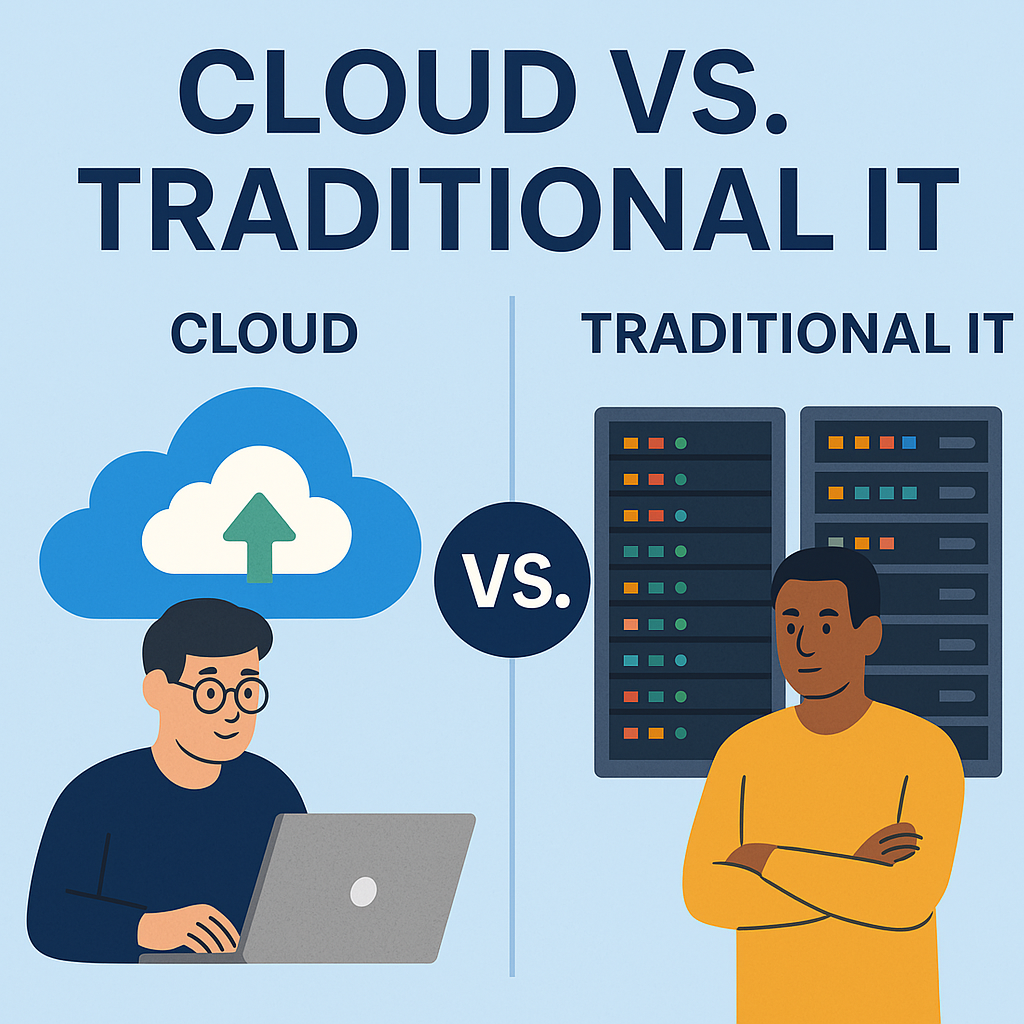
What is Traditional IT?
To begin with, traditional IT refers to the on-premise infrastructure that organizations have used for decades. Specifically, this involves purchasing physical servers, networking hardware, and software licenses. In this setup, the IT team is entirely responsible for installation, maintenance, updates, and overall security.
What is Cloud Computing?
On the other hand, cloud computing allows users to access computing resources like servers, storage, and applications over the internet. These services are hosted on external servers, maintained by third-party providers like AWS, Microsoft Azure, or Google Cloud.
Key Differences
Let’s break down the primary differences to make it easier:
| Feature | Traditional IT | Cloud Computing |
|---|---|---|
| Infrastructure | On-premise | Remote, hosted online |
| Cost | High upfront investment | Pay-as-you-go |
| Scalability | Limited | Highly scalable |
| Maintenance | Handled in-house | Handled by provider |
| Accessibility | On-site access | Access from anywhere |
Advantages of Cloud Computing
Transitioning to cloud computing brings several benefits:
- Flexibility: Easily scale resources up or down.
- Lower Costs: Avoid large capital expenditures on hardware.
- Disaster Recovery: Cloud backups simplify data recovery.
- Collaboration: Remote teams can access files and apps easily.
When to Choose Traditional IT
However, traditional IT still holds value in certain scenarios:
- Data Sensitivity: Some industries require in-house servers for regulatory compliance.
- Performance Needs: High-performance computing often benefits from localized infrastructure.
- Legacy Applications: Some older systems aren’t cloud-compatible.
Which is Better for Beginners?
If you're just starting your journey in tech, cloud computing is generally the easier and more relevant path. Platforms like AWS and Google Cloud offer free tiers for experimentation. Moreover, many online tutorials and CodeforIndia's Full Stack and Data + AI Bootcamp integrate cloud tools into the curriculum, giving learners real-world experience.
Learning Resources
Here are some great resources to help you begin:
Conclusion
In conclusion, both cloud computing and traditional IT have their place. However, with the growing demand for remote access, cost-efficiency, and scalability, the cloud is quickly becoming the preferred choice—especially for beginners and startups.
By joining a structured program like the CodeforIndia Bootcamp, you can gain hands-on experience with cloud platforms and prepare yourself for modern tech careers.
Want more beginner-friendly tech guides? Read our blogs on AI Engineering and Learn Node js: The easy way! Learn and Start your journey